domingo, 4 de septiembre de 2016

jueves, 1 de septiembre de 2016
viernes, 26 de agosto de 2016
what is a earthquake
What is an Earthquake?
shaking or rolling of the

earth's surface. It is usually what happens when two blocks of the earth suddenly
slip past one another, or break apart from each other as a result of tension caused by prolonged
energy build up.
viernes, 24 de junio de 2016
ecosystem
What is an ecosystem? (form)

meaning of ecosystems
In an ecosystem, each organism has its' own niche or role to play.
Consider a small puddle at the back of your home. In it, you may find all sorts of living things, from microorganisms to insects and plants. These may depend on non-living things like water, sunlight, turbulence in the puddle, temperature, atmospheric pressure and even nutrients in the water for life. (Click here to see the five basic needs of living things)
What are the types of ecosystems?(form)
 There are essentially two kinds of ecosystems; Aquatic and Terrestrial. Any other sub-ecosystem falls under one of these two headings.
Terrestrial ecosystems
Terrestrial ecosystems can be found anywhere apart from heavily saturated places. They are broadly classed into:
The Forest Ecosystems
They are the ecosystems in which an abundance of flora, or plants, is seen so they have a big number of organisms which live in relatively small space. Therefore, in forest ecosystems the density of living organisms is quite high. A small change in this ecosystem could affect the whole balance, effectively bringing down the whole ecosystem.
source:
http://www.ecosystem.org/
viernes, 17 de junio de 2016
Water contamination
What is water pollution?
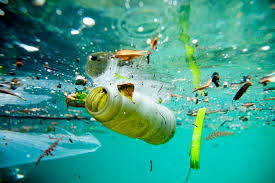 Water pollution is the
contamination of water bodies
(e.g. lakes, rivers,
oceans,aquifer
ers and groundwater), very often
by human activities.
Reference:
souerce:http://eschooltoday.com/
contamination of water bodies
(e.g. lakes, rivers,
oceans,aquifer
ers and groundwater), very often
by human activities.
Reference:
souerce:http://eschooltoday.com/
miércoles, 15 de junio de 2016
viernes, 10 de junio de 2016
energy transformation
June 10th
What is energy transformation?
 The conservation of energy principle states that energy can neither be destroyed nor created. Instead, energy just transforms from one form into another. So what exactly is energy transformation? Well, as you might guess, energy transformation is defined as the process of changing energy from one form to another.
Examples of energy transformation
There are so many different kinds of energy that can transform from one form to another. There is energy called chemical energy, heat energy ,electrical energy, fission nuclear energy, mechanical energy.
What are the pros and cons of chemical and electrical energy? (Consequence)
videos:
https://youtu.be/y_omJiYB2gk
Sources:
https://youtu.be/y_omJiYB2gk
Sources:
http://study.com/
https://www.google.com.pe/search?q=energy+transformation
Suscribirse a:
Entradas (Atom)